Novi founder, Oddny Gumaer, writes about her struggles with faith.
Ever since I was quite young, when my little sister Elin and I walked four kilometers each way to Sunday school, where we learned about Jesus walking on water and turning water into wine, I have identified as a Christian. There were gaps here and there: a period when Jesus had to give way to the fight against nuclear weapons, years when Amnesty felt more urgent than church. But aside from that, I have kept a more or less straight path into adulthood.
What I once took for granted is no longer so clear.
With age comes experience, and with experience comes uncertainty. What I once took for granted is no longer so clear. Is the Bible obviously right and the Quran obviously wrong? Are atheists without meaning, and do all Buddhists avoid meat? Is God actually good?
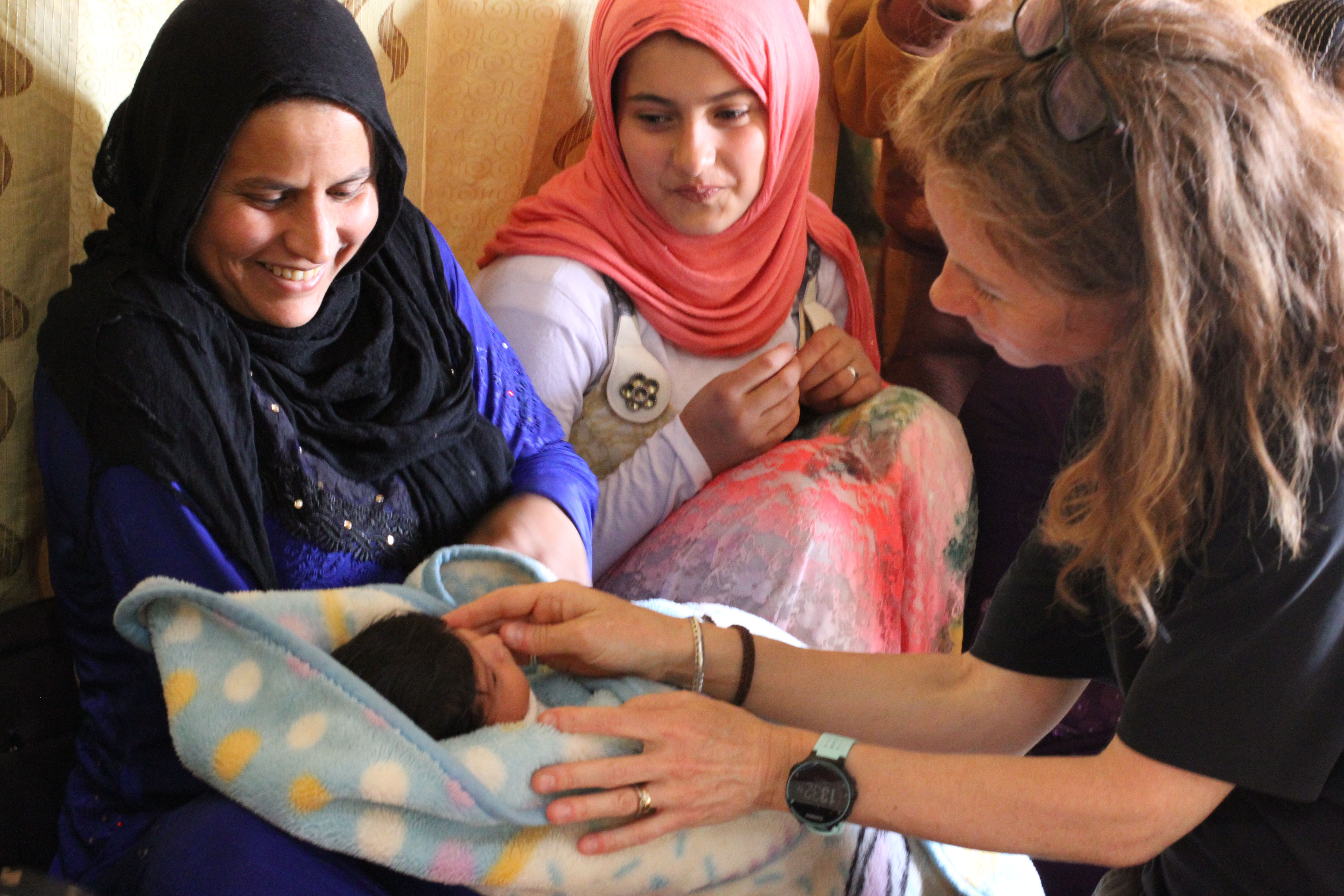
In a world with so many hungry people, children who have seen their parents murdered, women stripped of their dignity, men forced to kill, my faith has been challenged and replaced, at times, by doubt and confusion. Among Muslims whose faith and daily actions are far more noble than mine, I have found myself wondering why their relationship with God seems closer than my own. Among atheists whose love for their neighbors surpasses anything I can claim, and Buddhists who eat burgers without a second thought, I have understood that I have misunderstood.
I have friends who have stopped tanks, treated the sick at great personal risk, shared their last meal, given away everything they owned simply because they wanted to follow Jesus's example. And I know people who, reading the exact same Bible, have used it to justify oppression, hatred, and racism. People who publicly display an arrogance that divides humanity into us and them.
Muslims are killed in their prayer sanctuaries. Christians are killed in their churches. Believers are imprisoned and persecuted by those who say God is dead. And those who commit these acts say they do so because of faith. Because of God. Because of religion. How can people read the same commandments and conclude so differently? How can one person give life and another take it, having read the same words?
I don't believe violence and hatred have anything to do with God.
I don't believe violence and hatred have anything to do with God. Only with human beings. I don't think it has anything to do with religion, but with our capacity for self-deception. What is more effective than letting God bear responsibility for our selfish actions? When hunger for power can be disguised as devotion, when hatred can be dressed as commitment to one's faith, any action can be justified. Who can argue with God, or appoint themselves His judge?
There is one commandment that appears, in some form, in nearly every religion and moral tradition. We call it the Golden Rule: do to others what you would want done to you. Jesus said this. So did Confucius. The Buddha asked us not to hurt others, since we ourselves do not wish to be hurt. The Quran instructs us not to do injustice, since we do not want injustice done to us. Had all people lived by this principle, children would have enough to eat, the sick would have medicine, refugees a safe place to live. We would have ploughed the earth, not bombed it. We would have shared what we own, not plundered what belongs to others. We would have included rather than excluded. We would have listened more than we instructed.
I think: this is transcendent.
Even after seeing so much evil in the world, I still believe there is a God, and that he or she is good. I cannot watch a sunset, or see spring bring life from death, and believe otherwise. When I see people care for one another, or experience a fellowship that unites across every difference, I feel a closeness I cannot explain. When music carries me somewhere that is entirely beautiful, I think: this is transcendent. As is love for another person, the kind that surpasses all understanding.
"Do you not doubt God's goodness?" I once asked a group of internally displaced people who had recently lost everything, who were sheltering in a temporary hiding place with nothing more than the clothes they wore. They looked at me as though I had lost my mind. "God is not responsible for this. People did this to us," they said. "Do not take God away from us. If you do that, we have nothing."


The Novi Community is a 501(c)(3) non-profit organization