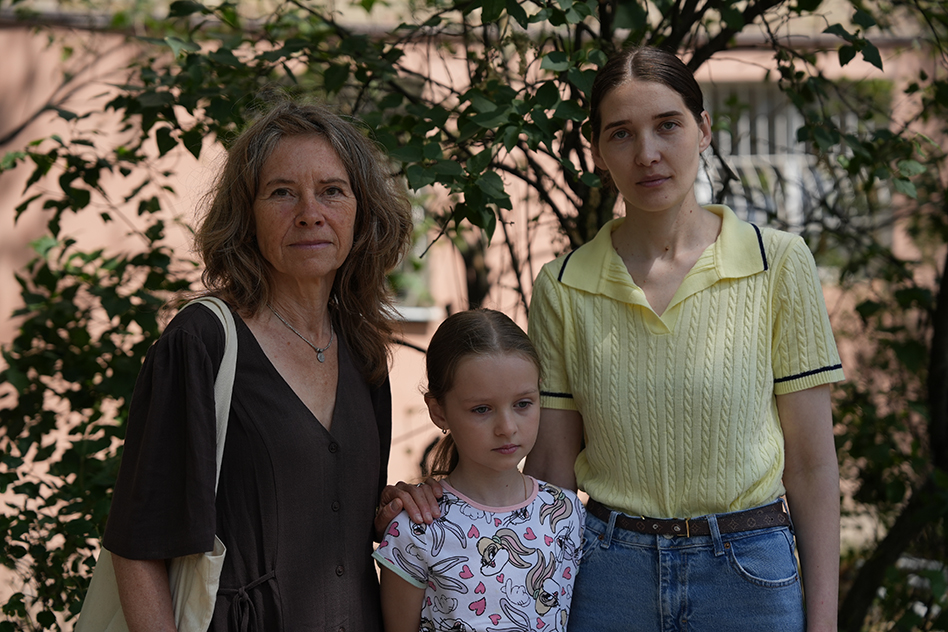
On the night of May 25, a small family huddled together in an underground garage with dozens of neighbors from their apartment building.
A mother, Oksana, her daughter, Vika, who is ten years old, and the dad, Vlad, who is a soldier stationed in Kyiv.
Vika was trembling with fear. Oksana was terrified too, but she did her best to stay calm for her daughter. Above them, explosions shook the city. As the sounds grew louder and closer, more and more people poured into the garage. They had abandoned their apartments, afraid that missiles and drones would strike their homes.
An elderly woman stumbled inside and collapsed. At first, people thought she had fainted. They tried to wake her, but soon realized she had suffered a heart attack. There was nothing they could do. The last thing she experienced was a brutal attack on her city and the cold concrete floor of a garage.
Vlad pulled out his phone and followed the news as the attack unfolded live. The images looked like scenes from a war movie. Buildings were burning across the city. Then the cameras focused on a fire. He looked closer. It was their apartment building.
Just meters away from where they were hiding, their home was being destroyed. They watched it happen live on television.
When the morning came and they could go outside again, everything was quiet. The contrast to the night before was staggering.
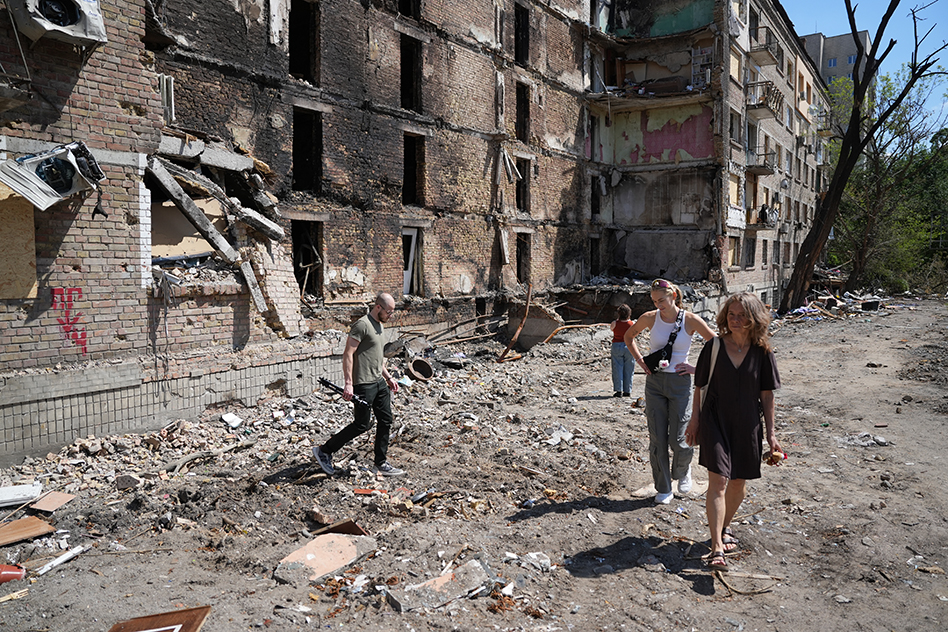
A few days later, Oksana told me this story as we stood outside the apartment building that had been her home for many years. What remained was only a shell. Windows were shattered, and entire walls had collapsed. Looking up, we could see a sofa perched on the edge of what had once been somebody’s living room.
Oksana never smiled while we talked. She was still in shock. Nearby, Vika wandered off to play with other neighborhood children. “She is scared all the time,” her mother said.
Since losing their home, Oksana and her family have been staying with neighbors. When she says they lost everything, she means it literally. “We don’t even have our own clothes,” she explained. There will be no insurance payout. The apartment was rented, and their belongings were uninsured. Now they must find somewhere else to live and begin again.
Oksana looks exhausted. She sighs and says she doesn’t want to stay in Kyiv anymore. It feels too dangerous. The enemy has openly declared its intention to destroy the city. They could be hit again.
“Do you want to leave Ukraine?” I ask.
“No, no, no,” she answers immediately.
“We are not leaving Ukraine.”
But they are considering moving to another town. Where, she doesn’t know. Because where is safe in Ukraine? As our conversation comes to an end, I thank her for sharing her story. She looks at me for a moment and asks a question I wasn’t prepared for.
“Why do you want to hear my story?”
“So we can tell other people what happened to you,” I reply.
She looks down.
“What does it matter?” she asks. “Who is going to care about what happened to my family?”
It is one of the saddest questions I have been asked.
Behind it lies a feeling that so many Ukrainians carry today: We feel alone.
Before leaving, we give Oksana some financial support. I am grateful that we can do at least that much. But it feels so small compared to what she and her family truly need. They need peace, safety, and they need an end to the constant fear of the next air raid, the next missile, the next night spent in a garage waiting to see whether their home will still be standing by morning.
Who is going to care?
We care. And my hope is that after reading Oksana’s story, you will care too.
-Oddny Gumaer


The Novi Community is a 501(c)(3) non-profit organization